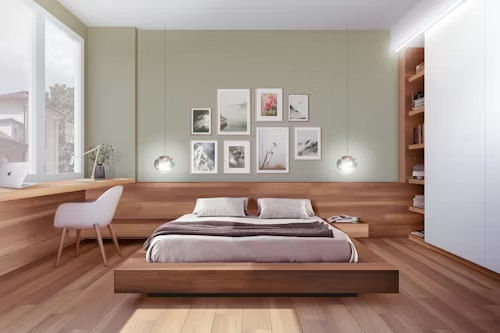
Home design involves more than just aesthetics. It also considers accessibility standards, fire escape routes and minimum dimensions for rooms.
Some decor trends are truly timeless, but others are destined to be dated. Find out which ones to embrace and which to leave in the past.
Natural Light
Sunlight is one of the most essential and attractive features of any home. It brightens up smaller spaces and enhances the visual impact of larger homes. It is also a source of health benefits, from improving mood and boosting energy to killing germs in the air and keeping things fresh.
Home builders should consider how sunlight can be utilized in their designs to create stylish, functional, and welcoming homes that are both environmentally friendly and healthy for all. Natural light has a number of positive effects on the human body and mind, so it is important to make sure that it is used in every room of the house.
Bringing natural light into your home can be accomplished through well-placed windows, skylights, and other openings. It can help reduce the need for artificial lighting and heating, saving you money while reducing greenhouse gas emissions and energy consumption.
Incorporating natural light into your home design can be as simple as widening a doorway to let in more sunlight, or it could involve adding more windows and skylights to your build. Your home designer can advise you on the optimal placement of these elements in your space based on the sun’s path throughout the day and the orientation of your house on your lot. The use of reflective materials can also be an effective way to maximise natural light and highlight any architectural details in your home.
Wellbeing
Whether you want to improve your home’s energy efficiency or make it more suitable for an elderly or disabled occupant, there are a range of architects who can offer you advice and provide you with detailed plans within budget. It’s also worth considering a loft or extension as a way of increasing your living space without the stress and cost of moving house.
Research has shown that the design and layout of our homes can have an impact on our health and wellbeing. This is referred to as “housing well-being”. It can be measured using core dimensions such as emotional attachment, size and modernity, brightness, neighbourhood, heating control and energy consumption, humidity, sleeping comfort and ventilation. There are also several periphery modules such as environmental awareness and behaviour, engineering preferences, taste/home-living styles and socio-demographic characteristics of occupants.
Eco-Friendly
The premise of eco-friendly homes might sound intimidating, but building sustainable houses is actually quite simple. You can incorporate LED lighting, energy-efficient appliances, and eco-friendly building materials.
These simple swaps can significantly reduce your carbon footprint. They also allow you to enjoy lower bills and a more future-proof living space. And, the best part is that you can take pride in making a difference as an individual.
Choosing eco-friendly building materials, using water conservation techniques, and prioritizing ventilation are just a few of the things you can do to make your home greener. Additionally, opting for renewable energy sources like solar panels and wind energies is a great way to save on electricity costs.
Aside from reducing your environmental footprint, an eco-friendly home can also benefit your health. Natural light, ample green spaces, and biophilic design features create a connection with nature, lowering stress levels and promoting mental well-being. Additionally, the use of eco-friendly products reduces exposure to harmful chemicals, ensuring a healthy indoor environment for you and your family.
The most important thing to remember when building an eco-friendly home is to prioritize sustainability at every stage of construction. This includes site selection, minimizing impacts on the local ecosystems, and avoiding flood zones and sensitive habitats. It also includes design strategies to optimize energy efficiency, such as orienting the house for passive solar heating and cooling, and incorporating shading to manage sunlight.
Luxurious
As the world is increasingly focused on sustainability, luxury homeowners are implementing eco-friendly concepts into their home design. This includes green building materials, energy-efficient appliances, and even hidden conveniences like heated floors and custom-designed built-ins. This trend is a great way to elevate the look of your new luxury home while maintaining peak levels of quality.
Another popular trend in luxury home design is “quiet luxury.” This design concept centers on superior materials that maintain their beauty through time, embracing understated elegance rather than ostentatious opulence. Using materials like rich woods, silks, and velvets can add visual depth and interest while elevating your space to the next level of sophistication.
Adding natural elements is also a top luxury home design trend, with large windows, indoor gardens, and other features creating permeability between the inside and outside. This connects your home to nature while promoting a sense of well-being and enlightenment.
Other popular luxury home design trends include upgrading kitchens and bathrooms to strike a balance between function and flair. Natural woods, organic colors, and bold stone are often used in kitchens to create high-impact looks while smart toilets, bidets, wall-hung sinks, and touchless faucets offer the latest technology and improved functionality. Statement art is another way to tie the spaces together and add a final pop of personality.
Featured Image Source: https://images.unsplash.com/photo-1633944095397-878622ebc01c?w=500&auto=format&fit=crop&q=60&ixlib=rb-4.0.3&ixid=M3wxMjA3fDB8MHxzZWFyY2h8MjN8fGhvbWUlMjBkZXNpZ258ZW58MHx8MHx8fDI%3D