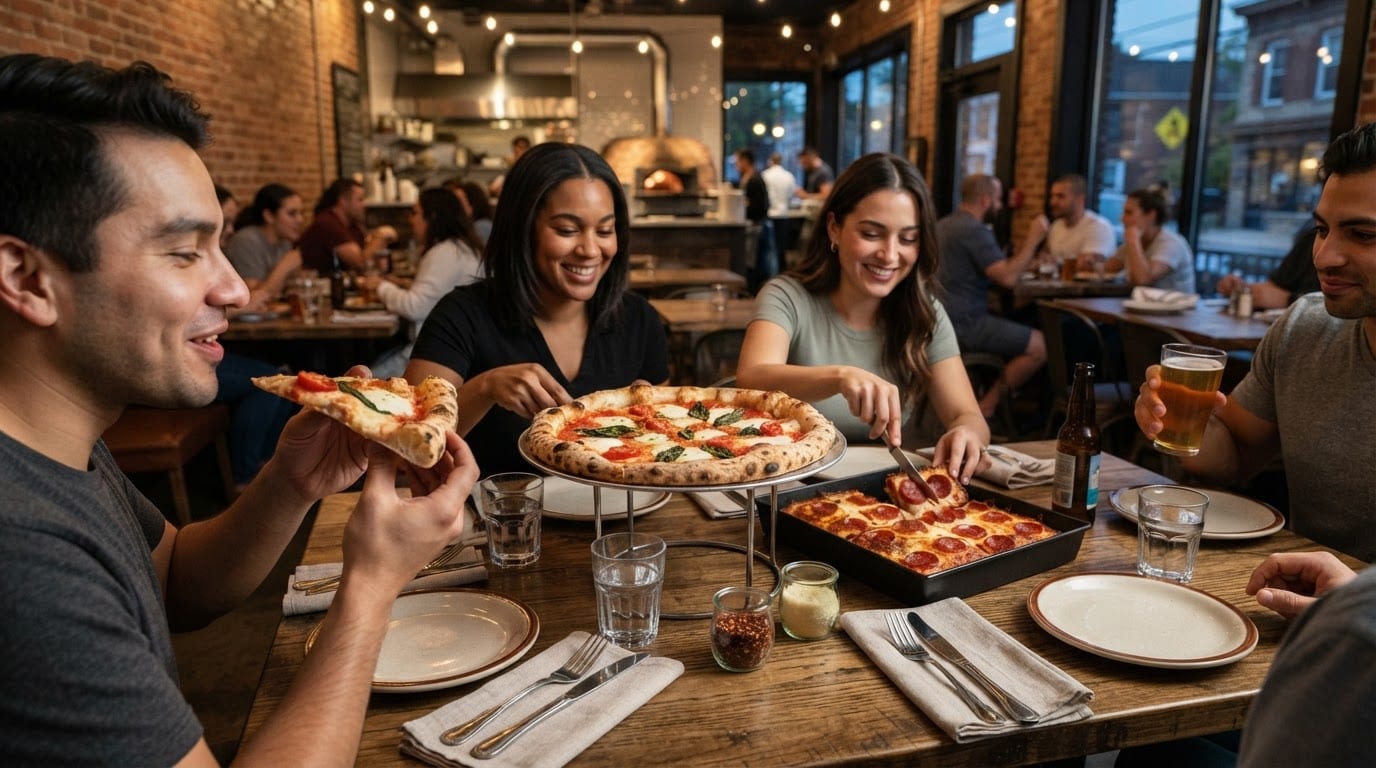
Few foods vary as much from one kitchen to the next as pizza. Two pies can share the same menu description, flour, and cheese, yet arrive with entirely different textures, one soft and collapsing under its own toppings, the other crisp enough to hold its shape. Knowing what to look for turns a casual order into a deliberate choice, and it helps explain why a particular slice or pie stands out in a town like West Chester, where options range from university-adjacent counters to sit-down dining rooms.
For readers starting from a search for the best pizza in West Chester, the most useful first step is to decide what kind of pizza you want before you decide where to get it. This guide sets out the criteria that matter, matches them to common cravings and occasions, and explains the preparation details that separate good pies from memorable ones. It also covers ordering and reheating, since a pizza’s quality can change considerably between the oven and the table.
When you visit a place such as The Tomato Shack salad & pizza co, West Chester, a few observations will tell you most of what you need to know within the first bite. Look at the base first. Lift a slice and check whether the underside shows light char spots and whether the middle holds without drooping. Then consider the sauce. It should taste of cooked tomato rather than sugar or dried herbs alone, and it should sit under the cheese rather than pool on top of it. Finally, note the cheese. Good mozzarella browns in small, irregular patches and stretches cleanly, while cheese that releases a sheen of water usually signals an overloaded or poorly drained pie.
How This Guide Defines a Great Pie
This guide judges pizza against five criteria: crust texture and chew, sauce balance, cheese quality, oven method, and consistency across visits. Crust texture covers the crispness of the base, the structure of the rim, and the open or tight crumb inside. Sauce balance asks whether acidity, sweetness, salt, and herbs work together and whether the sauce complements the other toppings. Cheese quality considers the type of mozzarella, how it melts, and whether it browns evenly. Oven method reflects the equipment and heat that produced the pie, since a deck oven, a conveyor oven, and a steel pan each leave different marks. Consistency matters because a single good slice on a single visit says less than a pattern across several.
These criteria keep the recommendations grounded. A pizza is not ranked highly because it is expensive or because the dining room is attractive, but because its components are executed well and repeatedly.
Matching the Style to the Craving
Before choosing a restaurant, decide which style fits the meal. Pizza styles differ in structure, hydration, fat content, and bake, and each produces a distinct eating experience.
Thin and Crisp Tavern-Style
Tavern-style pies are rolled thin, usually cut into squares or rectangles, and baked until the base has a cracker-like snap. A well-made version bends slightly when lifted but does not flop, and its edges show a dark, almost toasted color without tasting burnt. When judging the cut, look for clean edges rather than torn ones, which often indicate a dough that was stretched too aggressively or handled while cold. In the bake, watch for uneven spots. A few blistered bubbles are a sign of a hot deck or steel, but a soggy center under a crisp rim means the pie went into the oven with too much sauce or cheese for the base to handle.
Thick, Pan, and Square
Thick and pan-style pizzas rely on a higher dough hydration and a longer proof, producing an open, airy crumb inside and a fried, golden bottom where the dough meets oil in the pan. Structure is the defining feature. The crust should hold up under a generous topping load without turning gummy. Cheese-to-sauce ratio matters more here than in thinner styles. Many pan pies carry cheese to the edges, creating a caramelized frico-like border, and sauce is often spooned on top in stripes. If the sauce overwhelms the cheese, the pie tastes acidic and heavy. If the cheese dominates without enough sauce, the experience becomes rich but one-dimensional.
Classic Foldable Slices
The by-the-slice format is judged on its fold. A good slice bends into a U without cracking, and the center is thin enough to fold without the tip releasing toppings. Grease balance is the second test. Some oil on the surface indicates good pepperoni or sausage rendering, but pooled grease that soaks through a paper plate suggests the cheese is too moist or the slice has been sitting under a heat lamp. Crust character completes the assessment. The rim should be chewy with some airy pockets, and the underside should have a sturdy, slightly crisp surface that resists sogginess for the first several minutes.
Best Picks by Occasion
Different situations call for different pizzas, and a single top recommendation rarely fits all of them.
- A quick lunch: A single slice or a small personal pie is usually enough. Look for a style that holds up at room temperature for ten to fifteen minutes, which generally means a sturdy, lightly oiled base rather than a thin, watery one.
- A family dinner with kids: Plain or lightly topped pies are easier to share, and a whole 14-inch pie typically costs between $18 and $30 in the Chester County area, depending on toppings. Ordering a salad alongside a pie can balance the meal without multiplying the number of separate orders.
- A casual date night: Consider a sit-down setting where the pie arrives fresh from the oven. Pan-style or blistered thin-crust pizzas tend to look more deliberate on the table, and sharing one pie with a salad keeps the meal relaxed.
- Late-night or game-day orders: West Chester’s university population drives heavy demand during evenings and home game weekends. Ordering early in the window, or choosing a style that travels well, reduces the chance of a soft, steamed crust by the time the box arrives.
The aim is to match the pie to the moment, not to treat one choice as universally correct.
What Sets Memorable Pizza Apart
Preparation details explain most of the differences between good and great pizza, and knowing a few terms helps when ordering or asking questions.
Dough fermentation. Cold-fermented dough, typically held in refrigeration for 48 to 72 hours, develops more complex flavor and a better crumb than dough made the same day. Same-day dough, often proofed for four to eight hours, is faster and more economical, and it can still produce a good pie, but it usually tastes flatter.
House-made versus purchased sauce. Sauce made in-house can be adjusted for acidity and seasoning, while commercial sauces often rely on added sugar or stabilizers to stay consistent across batches. Neither approach is automatically better, but a sauce that tastes distinctly of fresh tomato and herbs suggests careful preparation.
Fresh versus low-moisture mozzarella. Fresh mozzarella, or fior di latte, carries more water and creates a soft, milky melt, but it can make a pie watery if not drained. Low-moisture mozzarella, the form most often used on commercial pizza, melts into a stretchy, browned layer and holds up better under heavier toppings. Ask which type is used if the texture matters to you.
Topping sourcing. Locally sourced produce, vegetables sliced fresh rather than pre-diced, and cured meats cooked to order generally show in the final pie. Pre-cooked toppings can be perfectly acceptable, but they rarely contribute the same char and aroma.
Dietary considerations. Gluten-free crusts are often prepared on shared surfaces and can be cross-contaminated in busy kitchens, so anyone with celiac disease should ask how orders are handled. Vegetarian options usually involve questions about pepperoni cups, which are often made with pork, and about whether vegetable toppings are roasted on the same surfaces as meat. Clear answers to these questions matter more than the menu label alone.
Food safety is also part of the picture. Food handlers in Pennsylvania commonly hold ServSafe certification, an ANSI-accredited program administered by the National Restaurant Association, and local food establishments are inspected under Chester County Health Department oversight. Inspection records are a practical reference point for any restaurant you are considering.
Ordering, Value, and Reheating Tips
How you receive a pizza affects its quality as much as the kitchen does. Dine-in offers the best chance at a fresh crust, since the pie leaves the oven and reaches the table within minutes. Takeout is the next best option, provided the box is vented and the pie is eaten within twenty to thirty minutes. Delivery adds the most variables. Steam trapped in a closed box softens the base, and a longer route in colder months, when temperatures in Chester County can drop well below freezing, can cool the cheese quickly. For delivery, thin and tavern-style pies suffer the most, while thick and pan styles hold their character better.
Value depends on group size. A by-the-slice order makes sense for one or two people who want variety, and slices typically run between $3 and $5 in the area, though prices vary by topping. A whole pie is usually better value for three or more people, since a large pie can break down to six or eight slices at a lower per-slice cost. Pan-style pies are heavier and tend to feed fewer people per pie, so consider them for smaller groups with bigger appetites.
Reheating is where many leftovers lose their appeal, and the microwave is the least effective tool. A better method is a skillet over medium-low heat, covered for two to three minutes to warm the cheese, then uncovered for another two to three minutes to re-crisp the base. An oven preheated to 450°F, with the slices placed directly on a rack or a sheet pan, takes about five to eight minutes and restores more crispness than a skillet for thicker styles. A toaster oven or air fryer at around 375°F for three to five minutes works well for single slices. Avoid stacking slices or covering them tightly, since trapped moisture is what turns a crisp base soft.
Standout pizza in West Chester is not a single destination. It is a set of decisions about style, setting, and execution. By judging the crust, sauce, cheese, and oven method, and by matching those qualities to the occasion, readers can find the pie that fits their meal, and they can recognize quality on their own the next time they order.