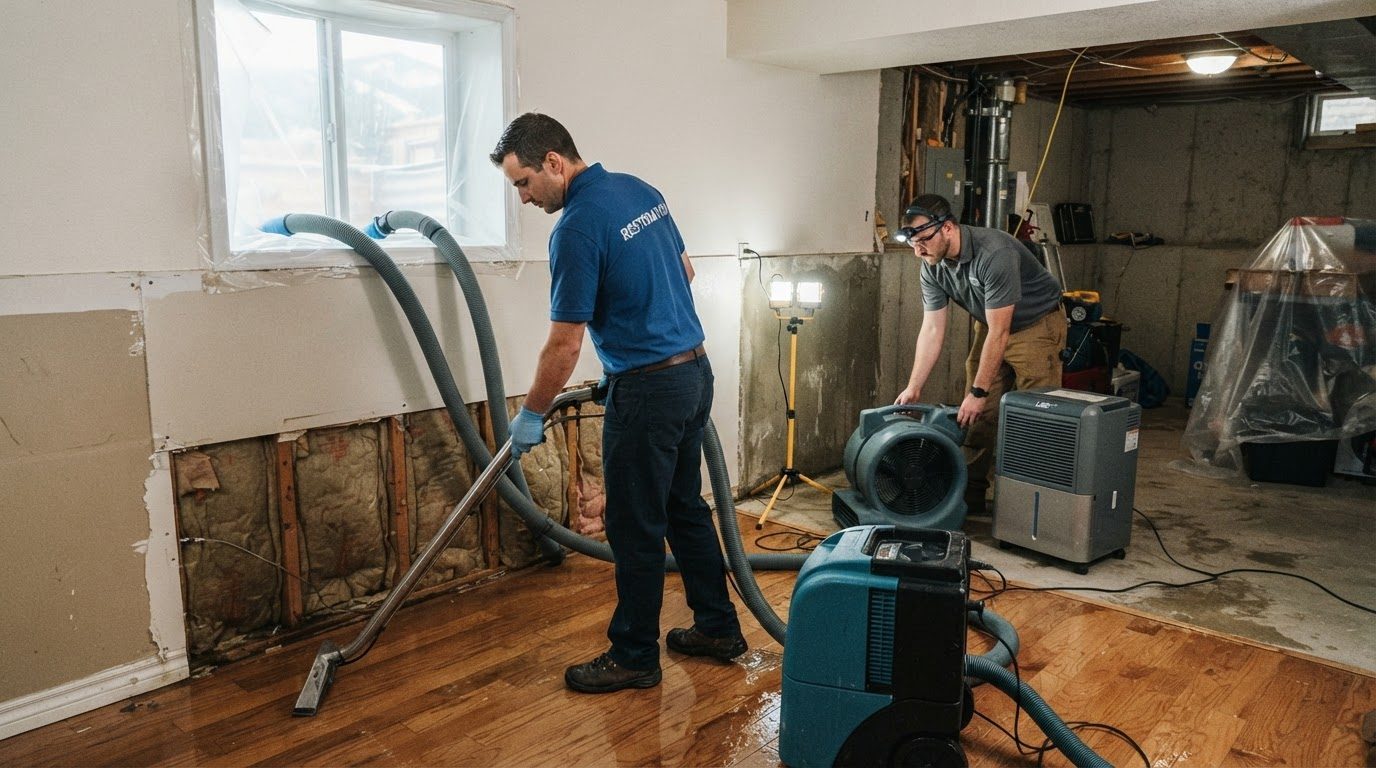
A burst pipe, failed appliance, or sudden storm can turn a dry Denver property into a complex structural problem within hours. Water moves through flooring, wall assemblies, insulation, and contents, often reaching concealed areas before visible damage appears.
A professional Water Damage Restoration Service helps property owners address the source, remove standing water, document moisture, and reduce the risk of secondary damage. The right response combines emergency safety measures with a methodical drying and repair plan.
Because every loss is different, Restoration Logistics – Denver can be evaluated alongside other providers by asking how technicians assess moisture, manage contamination, communicate with insurers, and document completed work. The goal is not simply to remove visible water, but to return the property to a safe, functional condition.
Immediate Steps When Water Enters Your Home or Business
Rapid action limits material loss and can prevent microbial growth, swelling, delamination, corrosion, and structural deterioration. Porous materials begin absorbing water immediately, while trapped moisture can remain inside cavities long after surfaces look dry.
Start with safety:
- Shut off the water supply if the valve is accessible and doing so does not expose you to electrical or structural hazards.
- Turn off electricity to affected areas only from a dry, safe location. Never enter standing water to reach a panel.
- Keep people and pets away from sagging ceilings, contaminated water, damaged flooring, and energized equipment.
- Move small valuables and undamaged contents to a dry area if they can be removed safely.
- Photograph and video affected rooms, materials, contents, and the apparent source before cleanup changes the scene.
- Contact your insurer or property manager and report the incident promptly.
Emergency intervention is appropriate for sewage backups, extensive flooding, contaminated water, ceiling collapse or severe sagging, water near electrical systems, major pipe failures, and losses affecting multiple rooms or floors. Technicians should handle extraction from contaminated water, demolition decisions, electrical concerns, and drying inside walls or subfloors. A homeowner can mop a small clean-water spill, but should not rely on fans alone when water has entered building assemblies.
What a Professional Water Damage Assessment Should Identify
A sound assessment establishes four essentials: where the water came from, where it traveled, what materials are affected, and whether the water presents a contamination hazard.
Technicians commonly use calibrated moisture meters, penetrating probes, infrared thermal imaging, hygrometers, and documented moisture maps. Thermal imaging can help locate temperature patterns associated with damp materials, but it does not replace meter readings. Inspection may extend into wall cavities, crawl spaces, basements, subfloors, cabinets, insulation, and HVAC-adjacent areas.
Water is often classified by contamination level:
- Category 1 is typically clean water from a supply line or failed fixture, although it can become contaminated if it remains stagnant.
- Category 2, or significantly contaminated water, may come from washing machines, dishwashers, toilet overflows without fecal matter, or sump failures.
- Category 3 includes sewage, floodwater, groundwater, and other heavily contaminated sources containing pathogens or hazardous substances.
This classification affects personal protective equipment, cleaning agents, disposal procedures, and whether materials can be restored. Porous items exposed to Category 3 water frequently require removal rather than surface cleaning.
The scope and cost depend on water volume, exposure time, property size, affected materials, accessibility, contamination, contents handling, demolition requirements, and reconstruction complexity. A credible assessment should explain these variables rather than offer a precise price before inspection.
The Restoration Process: Extraction, Drying, Cleaning, and Repairs
Water damage work is best understood as a sequence of controlled operations.
1. Extraction and selective removal
Technicians use truck-mounted or portable extractors, pumps, wet vacuums, and specialized tools to remove standing water. Materials that cannot be dried or safely cleaned—such as saturated carpet pad, damaged drywall, insulation, or contaminated porous contents—may be removed.
Demolition should not be based solely on appearance. Moisture readings, material construction, contamination category, and the ability to access trapped water should guide removal decisions.
2. Structural drying
Air movers increase evaporation from wet surfaces, while dehumidifiers remove moisture from the air. Commercial desiccant dehumidifiers may be useful in colder conditions or enclosed spaces; refrigerant units are common in warmer environments. Technicians track temperature, relative humidity, humidity ratio, and material moisture content.
Equipment placement is a trade-off: aggressive airflow can accelerate drying, but it may also spread contaminants if containment and filtration are inadequate. HEPA air scrubbers and negative-air systems may be used when demolition or contamination creates airborne particles.
3. Cleaning, sanitizing, and odor control
Cleaning depends on the source. Clean-water losses may require limited treatment, while gray- or black-water events require removal of contaminated materials, antimicrobial procedures, controlled disposal, and appropriate personal protective equipment. Odor treatments should address the moisture and contamination source rather than conceal it.
4. Monitoring and verification
A restoration company should revisit the property, record moisture readings, adjust equipment, and compare readings with unaffected reference materials. Drying is complete when materials reach reasonable equilibrium with the building and documented targets—not merely when the surface feels dry.
5. Repairs and reconstruction
Remediation stabilizes and dries the property. Restoration returns it to a finished, usable condition. Repairs may include drywall, flooring, cabinetry, trim, paint, insulation, framing, or subfloor replacement. Some companies perform reconstruction directly; others coordinate licensed trade contractors.
Relevant safety and technical practices may involve OSHA requirements, EPA guidance for certain materials, local building codes, and industry standards such as those published by the Institute of Inspection, Cleaning and Restoration Certification (IICRC). Specialized work involving asbestos, lead-based paint, electrical systems, gas appliances, or structural damage may require qualified specialists and permits.
Residential and Commercial Water Damage Challenges in Denver
Denver properties face several recurring risks: freezing temperatures that split supply lines, snowmelt entering basements, intense storms, roof and window intrusion, aging plumbing, crawl spaces, and fluctuating indoor humidity. Older homes may also contain layered flooring, plaster, narrow cavities, or plumbing systems that complicate access.
Common residential losses include:
- Burst pipes and frozen hose bibs.
- Water heater, washing machine, dishwasher, or refrigerator-line failures.
- Roof leaks and window flashing problems.
- Basement flooding, failed sump pumps, and sewer backups.
- Overflowing toilets and plumbing supply-line leaks.
Commercial restoration adds operational pressure. A warehouse may need inventory segregation and forklift access; a retail site may require dust control and after-hours work; an office may need temporary relocation, server-room protection, and coordination with occupants. The plan should prioritize critical equipment, inventory, life-safety systems, customer access, and business continuity.
Multi-unit buildings require communication with owners, tenants, property managers, and sometimes homeowners’ associations. Technicians may need to trace water between units, isolate affected zones, protect common areas, and coordinate drying without unnecessarily disrupting unaffected residents.
Costs, Insurance Coordination, and Preventing Repeat Damage
There is no reliable universal price for water damage restoration. As broad U.S. planning benchmarks, minor extraction and drying may cost roughly $500–$1,500, while substantial residential mitigation commonly ranges from $2,000–$8,000 or more. Large losses, contaminated water, contents manipulation, demolition, and reconstruction can exceed $10,000. Local labor, access, emergency response, and material prices can move these figures substantially.
Before cleanup, photograph the source and affected areas, preserve damaged items when safe, and keep receipts for emergency expenses. Do not delay urgent mitigation simply to wait for an adjuster; preventing further damage is generally a property owner’s responsibility, subject to policy terms.
Ask for:
- An itemized scope separating extraction, demolition, drying, cleaning, contents, and repairs.
- Moisture maps, equipment logs, and drying verification.
- Clear documentation of changes to the original scope.
- The contamination category and proposed handling procedures.
- Communication procedures for the adjuster, property manager, and occupants.
- Proof of insurance, technician training, and any required licenses or subcontractor qualifications.
Coverage varies. Sudden accidental discharge may be covered, while gradual seepage, maintenance issues, or flood damage may be excluded or require separate coverage. An adjuster determines coverage; the restoration contractor documents the physical work and cost.
Prevention is usually less expensive than recovery:
- Inspect appliance hoses, supply lines, shutoff valves, and water heaters.
- Insulate vulnerable pipes and maintain indoor heat during cold Denver weather.
- Clean gutters, maintain roof penetrations, and improve drainage away from foundations.
- Test sump pumps and consider a battery backup.
- Install leak sensors, automatic shutoff valves, and high-water alarms.
- Monitor basements, crawl spaces, and mechanical rooms for humidity and concealed leaks.
The strongest water damage restoration service combines safe emergency response, measurable drying, contamination control, transparent insurance documentation, and competent reconstruction. For Denver property owners, choosing a provider that can explain each of those steps is more valuable than choosing one based on a promised arrival time or an unsupported low estimate.